Is Generative Ambient Music Worth It? A Beginner's Comparison
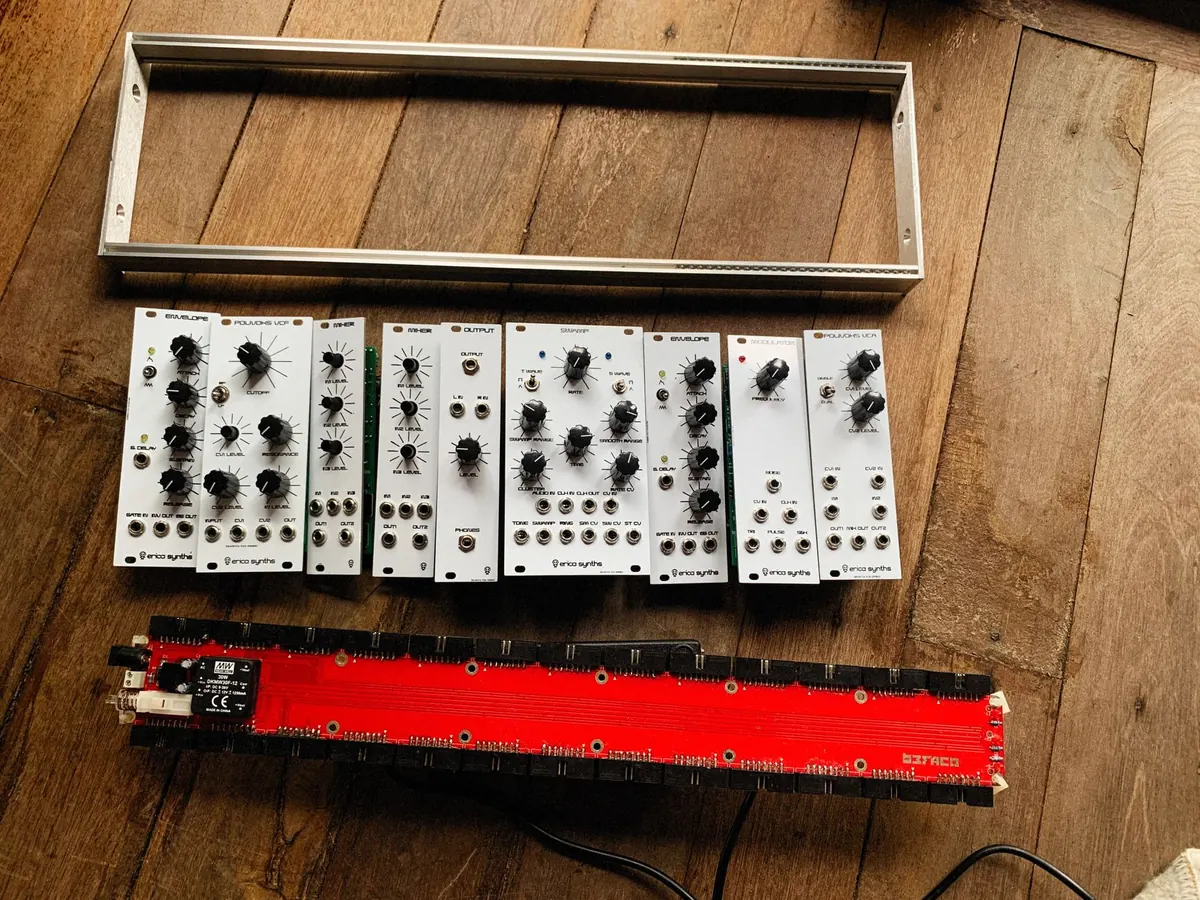
Two pieces of ambient music can sit in the same playlist and behave nothing alike. One is a recording: the same voicings, the same slow fade, the same run time, every single time. The other is a system — a few rules, a couple of drifting oscillators, a reverb tail that never settles quite the same way twice. Both are genuinely ambient. They simply ask different things of you, and they are good at different jobs.
If you are deciding where to put your listening hours, or your money, it helps to know which of the two you are actually reaching for.
Generative music is music where the maker sets up conditions rather than fixing every note. The term is usually credited to Brian Eno, and his early experiments are a decent mental model: short phrases of different lengths looping against each other, so the alignment keeps shifting. Nothing repeats exactly, because the system has no interest in repeating.
Modern versions look similar in spirit. A modular patch that samples a random voltage every few seconds and turns it into a pitch. A Max or Pure Data patch that triggers chords when a timer decides. A plugin that scatters grains across a buffer, or an app that lets you set density, key and brightness and then leaves you alone.
The definition matters, because plenty of tracks labelled generative are really just long recordings. Two quick checks separate them. First: does the file end? A fixed piece has a run time; a system does not. Second: what controls do you get? A play button suggests a recording. Sliders for density, range and probability suggest a living patch.
Shape. A fixed piece can build, withdraw, hold a single chord for four minutes and then take it away. It can end, which matters more than it sounds. Ending is a decision, and decisions are what you hire a composer for.
Familiarity is the second gift. When you know a piece well, it becomes a cue rather than a stimulus — the first bars tell your body that this is the falling-asleep album, or the Thursday-afternoon-deep-work album. That associative pull is hard to fake with something that reinvents itself nightly.
The trade-off is repetition fatigue. Play the same forty minutes every evening for a month and you will start hearing the joins: the same piano note, the same swell, the same moment where the bass drops out. Once you can predict it, it stops doing much. You are also, permanently, living inside someone else's decisions.
For sleep, a fixed album usually wins — especially if you loop it at low volume and let your brain learn it as a signal. But there is a catch: fixed tracks end, and the silence afterwards can wake you. Looping reintroduces the seam.
A slow generative patch solves that properly. Set it quiet, constrain the range so nothing sudden can happen, and leave it running. The risk is that a badly tuned system will occasionally spit out something jarring at 3am. Keep the parameters tight and it will not.
Both work, for opposite reasons. A known album is predictable, so it never pulls your attention. A generative patch gives you novelty without surprise — new material, but nothing that demands you follow it.
The trap with generative tools is the controls. It is very easy to spend an hour nudging density instead of writing anything. Set your patch before you start, hide the window, and use a timer rather than your own judgement about when the music has gone stale.
This is where generative music earns its keep. You cannot predict it, so you cannot coast through it. Sounds arrive that you would never have chosen, and occasionally one of them is worth stealing.
Fixed work rewards a different kind of attention: detail, structure, the craft of a transition. If you want to study how a piece is built, repetition is the whole point. If you want to be surprised, a system is more likely to oblige.
Opinions about ambient music are cheap. Try this instead:
One practical note on volume: long headphone sessions are worth treating with a bit of care. Keep levels moderate, take breaks, and if you notice ringing or muffled hearing that does not settle, get it checked — a pharmacist or GP can advise.
Less than the internet suggests.
Decide on the job first, then pick the tool. If you want something working tonight, take a fixed album you trust, set a sleep timer, and stop reading reviews. If you want a hobby as much as a soundtrack, download one free generative patch, leave every parameter at its default for a week, and listen properly rather than tinkering.
Most people end up with both: fixed records for the rituals you want to repeat, and a system humming quietly in the corner for the evenings when you would rather not know what comes next.
Photo: Alexey Demidov / Pexels